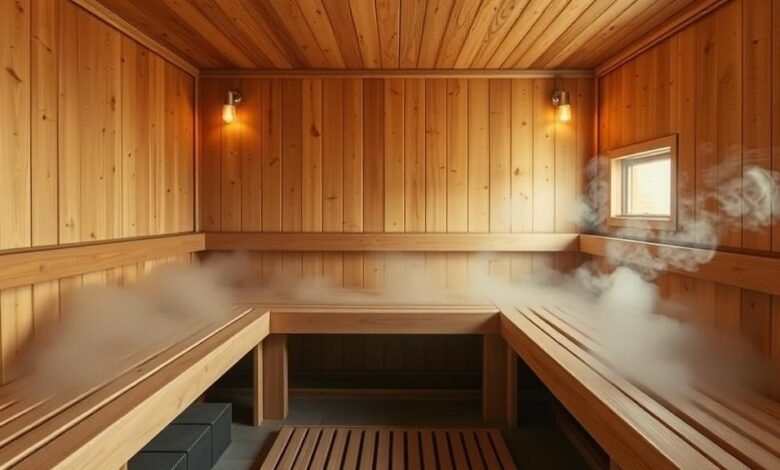
The right way to judge a complete breakdown of outdoor sauna is by how it will feel, fit, and hold up after the first month. Heat performance, electrical planning, materials, maintenance, and actual user habits matter more than showroom language.
Last October, my neighbor Rob tore open a pallet containing a flat-pack barrel sauna he’d ordered after watching three YouTube videos. He set it on bare dirt next to his shed, wired the heater himself off a 120V extension cord rated for a space heater, and invited me over for the inaugural session. Twenty minutes in, the breaker tripped. Two months later, the barrel had settled into the mud by about an inch and a half on one side. By spring, he’d spent more fixing the install than he’d saved by skipping the prep work.
Rob’s experience is not unusual. An outdoor sauna is one of those projects where the unit itself is maybe 60% of the decision. The other 40% is the pad, the electrical run, and whether you actually thought through your climate. Get those right and you have something you’ll use almost daily for years. Get them wrong and you have an expensive garden ornament.
Here is the practical read: most home outdoor sauna builds land between $2,490 and $16,980 depending on size, wood species, and heater class. Add $1,000 to $4,200 for the pad and electrical. The rest of this guide covers how to make those dollars work.
What the Spec Sheet Is Actually Telling You (and Hiding)
Spec sheets on outdoor saunas are exercises in selective emphasis. The font size on “Canadian red cedar” is always bigger than the font size on the joinery method. Here’s what to actually look for.
Cabin vs. barrel, and why it matters less than you think. Barrel saunas heat slightly faster because of the curved interior (less dead air volume per square foot). Cabin saunas hold more people comfortably and are easier to insulate. Either works. Pick based on your footprint and aesthetic preference, not because someone online told you barrels are “more authentic.”
Heater sizing. Match the heater to the cabin volume. This is the single most common mistake I see. A 4.5 kW heater is fine for a compact 4×6 barrel. Stick that same heater in an 8×10 cabin and it’ll run continuously, burn out elements faster, and never quite reach 180°F on a January evening in Minnesota. Manufacturer sizing charts exist for a reason. Use them instead of forum wisdom.
Wood and joinery. Cedar, hemlock, thermo-aspen, and redwood are the standard species. The real differentiator is the joint. Pre-cut tongue-and-groove cladding seals tight and holds insulation value. Cheaper builds use butt joints with felt strips. Those leak heat and look weathered within two seasons. If the listing doesn’t specify the joinery method, that’s your answer: it’s butt joints.
R-value in cabin builds. R-12 insulated walls are typical in mid-tier and premium cabins. Barrel saunas generally skip wall insulation (the stave construction creates its own thermal envelope, though a thinner one). If you’re in a climate where January nights hit single digits, an insulated cabin will outperform a barrel on energy cost and heat-up time.
For cold-plunge gear (since many outdoor sauna buyers are also shopping tubs), check chiller HP, filtration micron rating, ozone/UV sanitation, and tub material. A 1/3 HP chiller holds 50°F in a small insulated tub in a temperate climate. It will struggle badly in a Phoenix garage in August.
The Research Behind the Routine
The study that launched a thousand sauna purchases is Laukkanen et al., published in JAMA Internal Medicine in 2015. The team followed 2,315 middle-aged Finnish men for 20 years and found a dose-response relationship between sauna frequency and reduced cardiovascular mortality. Men using a sauna 4 to 7 times per week showed roughly half the cardiovascular mortality of once-a-week users. That’s a striking association, though it comes with the usual cohort-study caveats (healthy-user bias, self-reported frequency, a culturally homogeneous sample).
A 2018 follow-up from the same group, published in BMC Medicine, reported lower dementia incidence at higher sauna frequencies. The plausible mechanisms include heat acclimation, improved endothelial function, and a heart-rate response that mimics moderate-intensity exercise.
For a home user, 20-minute sessions at 170°F to 195°F, two to four times per week, is a reasonable starting point. Hydrate before and after. Step out if you feel lightheaded. The Laukkanen data is encouraging, but it studied Finnish men who’d been sauna bathing since childhood, not Americans who just unboxed a barrel kit. Start conservatively.
The Install Nobody Wants to Talk About
This is the boring truth about outdoor saunas: the install is where projects succeed or fail, and it’s the part most buyers want to skip past.
The pad. A 4-inch compacted gravel pad with a drainage layer is sufficient for a barrel unit on flat, stable ground. For cabin saunas, especially in cold or wet climates, a 4-inch reinforced concrete slab is the better call, at roughly $4 to $7 per square foot installed. Rob’s bare-dirt approach? That’s how you get a sauna that lists like a sinking ship by March.
The electrical. A typical traditional sauna heater pulls 4.5 to 9 kW on a dedicated 240V circuit at 30 to 50 amps. This is not optional, not negotiable, and not a DIY project for most homeowners. A licensed electrician should run the circuit, pull the permit, and tie into your main panel. I’ll say it plainly: cutting corners on 240V wiring in a wooden structure is how house fires happen.
Ventilation. An outdoor sauna needs an intake vent below the heater and an adjustable exhaust on the opposite wall near the ceiling. Without proper airflow, you get stale air, uneven heat, and a sauna that feels suffocating rather than relaxing.
Permitting. This varies wildly. Many counties treat detached structures under 200 square feet as exempt from building permits. But the electrical permit for a 240V circuit is almost always required. Call your local building department before you order anything. A five-minute phone call can save you a code-violation headache later.
What It Actually Costs, All In
The sticker price on the unit is the number everyone fixates on. The all-in number is what matters.
On the sauna side: $2,490 for an entry-level barrel kit. $6,000 to $10,000 for a mid-tier cabin with a quality heater. $12,000 to $16,980 for a panoramic glass-front or premium thermo-aspen build. Then add $400 to $900 for a gravel pad (or $1,200 to $2,400 for concrete), plus $600 to $1,800 for the 240V electrical run.
On the cold-plunge side: $4,500 to $7,500 for a residential insulated tub with integrated chiller. $9,000 to $14,000 for commercial-grade stainless with full filtration. Stock-tank DIY setups run $400 to $900, but you’re buying and hauling ice bags like it’s a part-time job.
Resale and tax angles. Appraisers won’t add dollar-for-dollar value for a sauna, but a well-built outdoor wellness setup is increasingly treated as a selling feature in Northeast and Pacific Northwest markets. On the tax side, a residential sauna is rarely HSA or FSA eligible unless a clinician issues a Letter of Medical Necessity for a documented condition. Don’t assume it qualifies. Talk to your tax advisor first.
How to Compare Without Going Crazy
An outdoor barrel sauna heats in 25 to 35 minutes and lives on a small pad. An indoor cabin heats faster but eats living space and requires venting to the outside. An infrared cabin runs at lower temps (120°F to 150°F), plugs into a standard outlet, but produces a different physiological response than traditional Finnish-style heat. Infrared is not “the same thing but easier.” It’s a different experience with different research behind it.
Cold plunges separate similarly. A purpose-built insulated tub with a 1 HP chiller holds 39°F to 45°F all day, no ice required. A stock-tank conversion can hit the same temps manually, but you’re at the mercy of your freezer’s ice output. A chest-freezer conversion is cheap and, in my opinion, mechanically marginal enough that I wouldn’t recommend it to anyone who isn’t comfortable with the electrical and sanitation risks.
The right answer is the build that matches your climate, your space, your install constraints, and the routine you’ll actually sustain three months after the novelty wears off. For a longer reference covering model lineups and price tiers side by side, see a complete breakdown of outdoor sauna. It’s worth bookmarking before you start comparing units.
When to Call a Pro (and When to Call Your Doctor)
Three moments in an outdoor sauna project where a professional pays for themselves:
Electrical, always. Any 240V circuit, period. This applies to traditional sauna heaters and commercial-grade cold-plunge chillers. A licensed electrician pulls the permit, sizes the breaker, and ensures nothing burns down.
Pad work in tricky conditions. Freeze-thaw climates, soft soil, sloped yards. A pad that settles or cracks under 800 pounds of sauna is expensive to fix after the fact.
Medical clearance. If you have an arrhythmia, uncontrolled hypertension, a recent cardiac event, Raynaud’s phenomenon, are pregnant, or manage a chronic condition, talk to your physician before you start any heat or cold protocol. The Laukkanen data is population-level. Your cardiologist knows your specific situation. A 10-minute conversation is worth more than any longevity podcast episode.
FAQs
How often does an outdoor sauna need maintenance?
Wipe down benches after each session and oil the exterior cedar or hemlock once a year. For cold plunges, replace filter cartridges every 6 to 12 weeks, run ozone or UV on schedule, and drain and refill per the manufacturer’s interval.
Will my electric bill spike from an outdoor sauna?
A 6 kW heater running for one hour costs roughly $0.60 to $1.20 at typical US residential rates. Three 20-minute sessions per week add about $4 to $8 monthly. A 1/2 HP cold-plunge chiller in steady state pulls around 350 to 450 watts and adds $8 to $15 per month in most climates.
Is an outdoor sauna safe during pregnancy?
Pregnant adults should not begin a new sauna or cold-plunge routine without explicit clearance from their OB-GYN. Core temperature changes carry real fetal risks, particularly in early pregnancy. This is a clear case where you defer to your physician, full stop.
How loud is an outdoor sauna?
A traditional sauna heater is silent in operation. A cold-plunge chiller runs at roughly 45 to 55 dB at one meter, comparable to a quiet conversation. Place the unit where the chiller hum won’t bother neighbors or interior bedrooms.
Can I run an outdoor sauna year-round in cold climates?
Yes, with caveats. Outdoor saunas are designed for cold weather and benefit from a longer pre-heat schedule in winter. Cold plunges with insulated tubs and integrated chillers handle below-freezing ambient temps if the chiller’s operating range supports it. Check the manufacturer’s spec sheet for low-temperature performance ratings.
Do I need a permit for an outdoor sauna?
Building permit requirements vary by jurisdiction. Many counties exempt detached structures under 200 square feet. However, the electrical permit for a 240V circuit is almost universally required. Call your local building department before purchasing.
How long does it take to install an outdoor sauna kit?
Most pre-cut kits can be assembled by two adults in a weekend (8 to 16 hours of labor). The pad and electrical work should be completed beforehand and may add a few days to a week depending on contractor scheduling.
Disclaimer. This article is general consumer information, not medical advice. Heat and cold therapies carry real cardiovascular load. Anyone with arrhythmias, uncontrolled hypertension, Raynaud’s phenomenon, recent cardiac events, or who is pregnant should consult a physician before starting any new sauna or cold-plunge routine.
Any 240V electrical work should be completed by a licensed electrician under the appropriate local permit.
HSA and FSA reimbursement on wellness equipment is patient-specific and depends on a Letter of Medical Necessity from a clinician. Talk to your tax advisor before assuming a purchase qualifies.